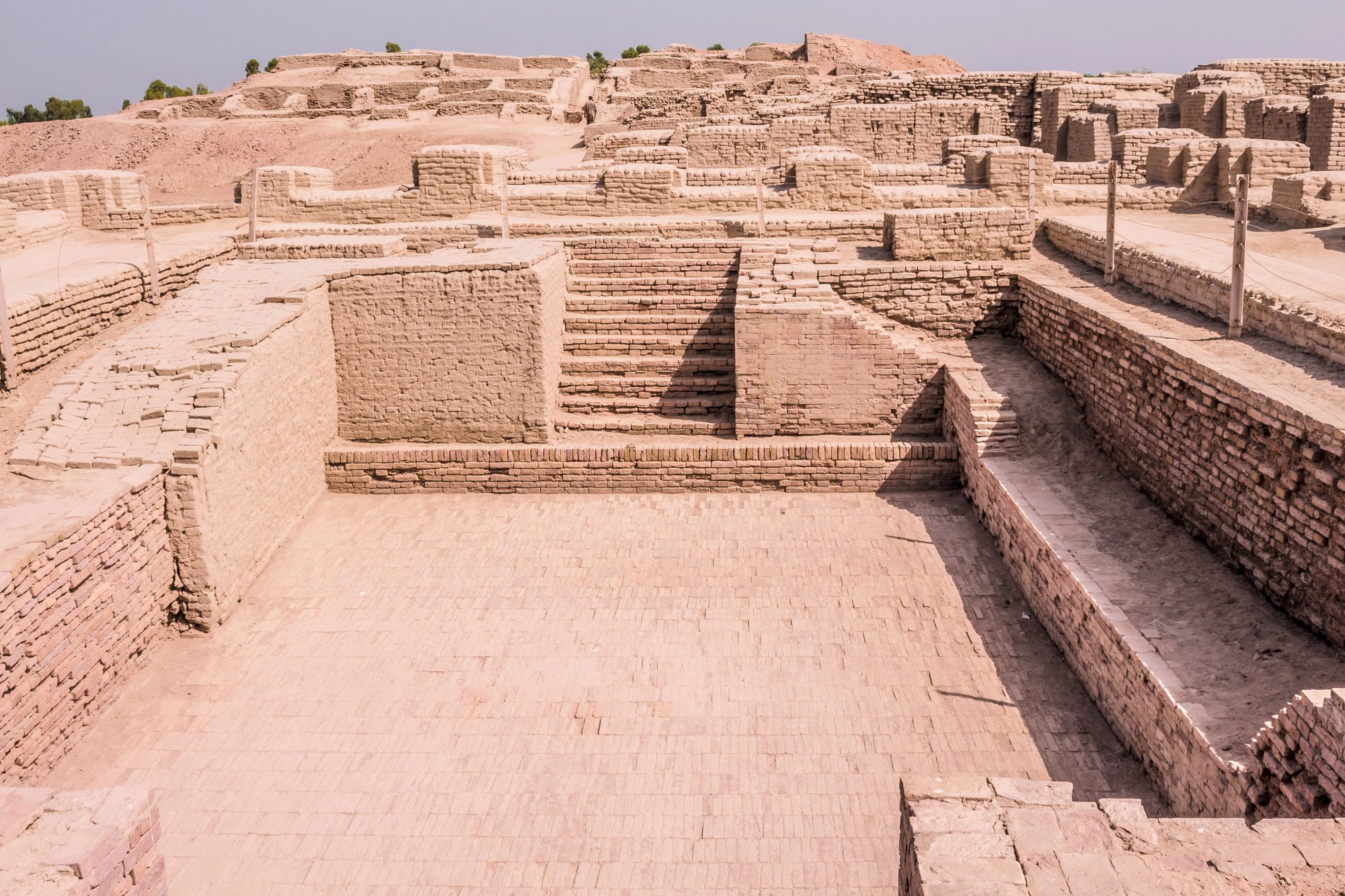
At Mohenjo-daro, the spaces between buildings help tell the story. Streets meet at right angles, and the layout includes systems for sanitation and drainage. These are clues to the organisation of an ancient city.
UNESCO identifies the site in Pakistan’s Sindh province as a major settlement of the Indus civilisation. Its account describes wells, public baths and an elaborate drainage system among the surviving evidence of urban life.
The site has two main sectors: an elevated citadel area to the west and the lower city to the east. Looking at that plan gives the ruins context. The individual structures were part of a larger civic arrangement.
For a first introduction, start with the layout rather than a list of superlatives. Ask how people moved through the streets, obtained water and managed waste. The surviving evidence makes those practical questions worth asking.
This is a historical introduction, not a current visitor guide. Opening arrangements, access and conservation conditions should be checked with the site authorities before planning a trip.